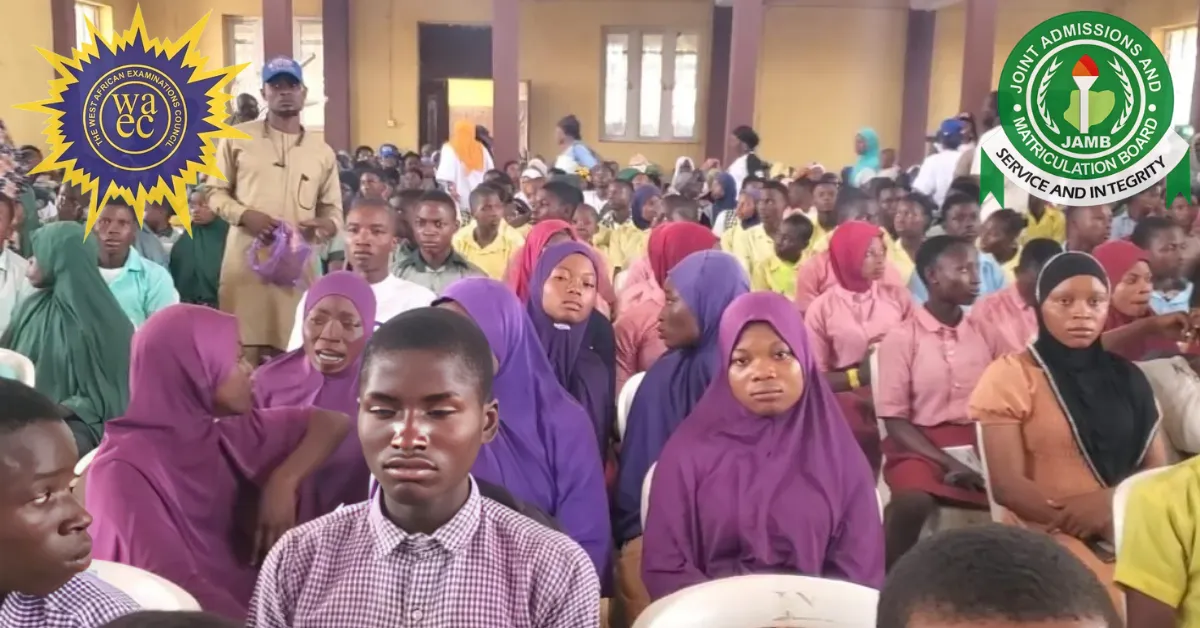
A decade of educational support reached a significant milestone in Ejigbo, Osun State, on Wednesday, 18th February, 2026, as 1,000 students walked away with free examination forms, bringing the total number of beneficiaries since 2016 to over 7,000.
The students, drawn from communities in Ede North, Ede South, Egbedore, and Ejigbo Federal Constituency, received the forms from Mr Ayodele Asalu, the sponsor behind the initiative, during a ceremony attended by parents, teachers, and political leaders.
Asalu, who serves as a chieftain in the All Progressives Congress, distributed 450 West African Examinations Council forms and 550 Unified Tertiary Matriculation Examination forms to the beneficiaries. He revealed that every student who received a WAEC form also automatically received JAMB registration.
Speaking at the event, Asalu traced the programme's evolution since its launch in 2016, explaining how it has grown to accommodate more students each year.
"Year on year, we increased the number of beneficiaries to accommodate rising needs and expand the reach of our intervention. Today, ten years after I first launched the idea, we have distributed over 7,000 WAEC and UTME forms in this Local Government and Federal Constituency," he noted.
The selection process prioritises merit and inclusivity. Students are chosen from 20 public secondary schools across Ejigbo, with the best 15 from each institution making the list. Beyond academic performance, religious organisations, traditional rulers, and community leaders nominate additional beneficiaries to ensure broad representation.
Asalu challenged the recipients to justify the investment by performing excellently in their examinations, reminding parents to provide the necessary support for their children's academic success.
The initiative has maintained consistent growth. In 2024 alone, approximately 600 students benefited, with 350 receiving JAMB forms and 250 receiving WAEC registration forms.
Explaining his motivation, Asalu described the programme as a response to the financial difficulties many families face when registering their children for examinations. He appealed to wealthy Nigerians to replicate such interventions, arguing that supporting less privileged students reduces economic pressure on vulnerable families and promotes social cohesion.
The 10th anniversary celebration highlights how sustained philanthropic commitment can transform educational access for thousands of young people across multiple communities over time.
No comments yet. Be the first to share your thoughts!