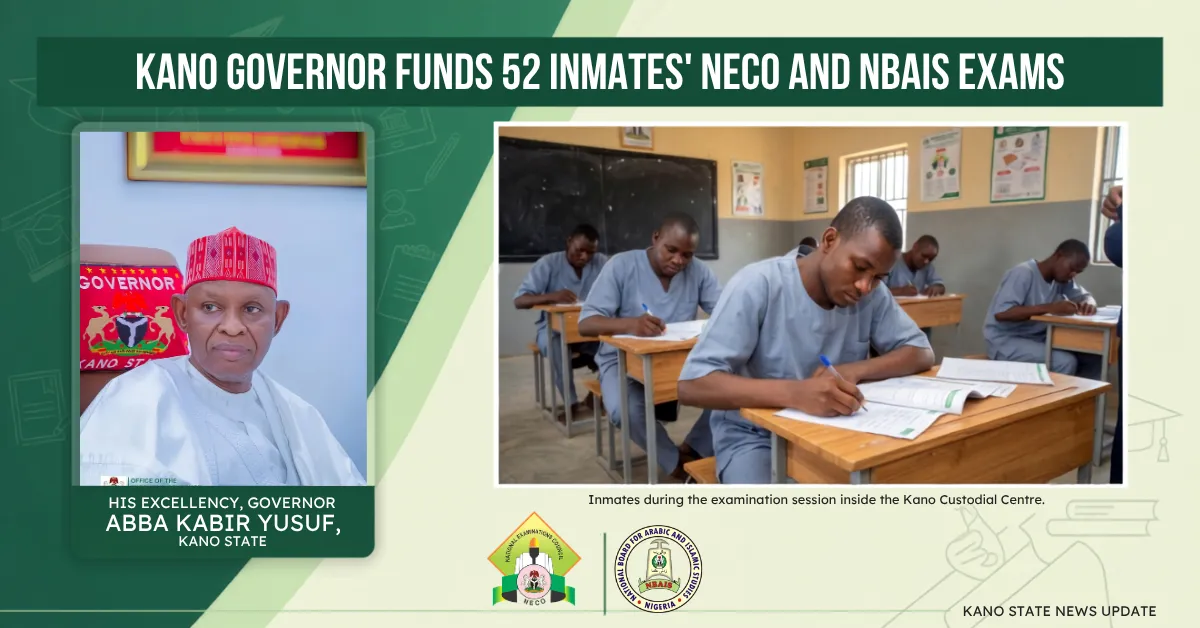
Governor Abba Kabir Yusuf's decision to sponsor registration fees for inmates has translated into direct action, with 52 custodial centre residents across Kano State now sitting the 2026 National Examinations Council and National Board for Arabic and Islamic Studies examinations.
Kano State Controller of Corrections, Yusuf Ahmad Lakpene, reaffirmed the Nigerian Correctional Service's resolve to expand educational programmes across custodial centres, describing the initiative as part of a broader strategy to encourage learning, personal development, and lasting behavioural change among inmates.
Ahmad Lakpene, who monitored the commencement of the examinations at designated centres, urged candidates to conduct themselves with discipline and integrity throughout the process. He described education as one of the most effective tools for transforming lives, reducing recidivism, and preparing inmates for productive reintegration into society upon completing their custodial terms.
The 52 candidates comprise 41 males and 11 females drawn from various custodial facilities across the state. Their participation spans both the NECO Senior School Certificate Examination and the NBAIS assessments, reflecting the range of educational pathways available within the correctional system.
Spokesperson Musbahu Kofar Nassarawa, who confirmed the development in a statement on Friday, said the examinations represented a continuation of the service's sustained investment in inmate welfare and reformation.
"Their participation reflects the Service's sustained efforts to promote rehabilitation, reformation, and successful reintegration by providing inmates with access to quality education and skills development," he said.
The controller commended Governor Kabir Yusuf for financing the candidates' registration, arguing that the sponsorship demonstrated the state government's broader commitment to inclusive education and human capital development.
"The intervention demonstrates the state government's commitment to inclusive education and human capital development, extending educational opportunities to persons in custodial facilities," Ahmad Lakpene said.


No comments yet. Be the first to share your thoughts!