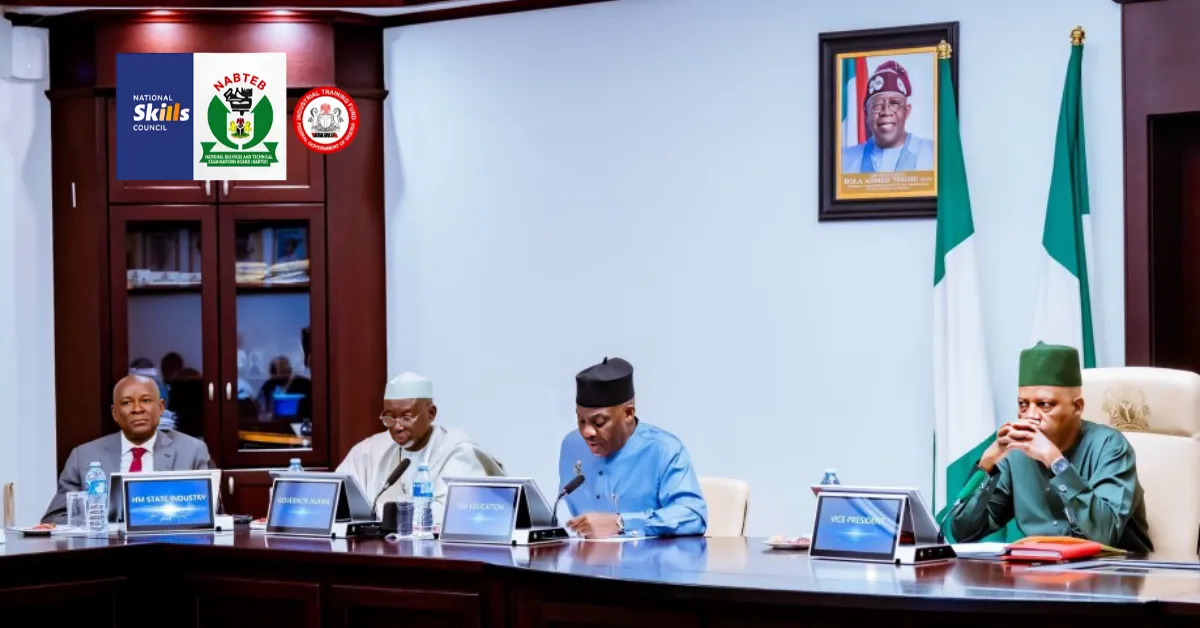
The National Council on Skills has ratified the alignment of the mandates of the Nigeria Board for Technical Education and the Industrial Training Fund, a development that signals expanded vocational and technical training opportunities for young Nigerians seeking skills and employment across key sectors of the economy.
The decision emerged from the ninth meeting of the council, chaired by the Vice President, Kashim Shettima, in Abuja on Tuesday. The council also adopted the National Skills Observatory platform as the foundation for evidence based policymaking and constituted a committee to review policy recommendations on aligning national skills development with industrialisation goals.
For students and graduates of technical institutions, the ratification means awarding bodies and sectoral skills councils will operate within a clearer and more structured national skills qualification framework, potentially improving the value and recognition of technical certificates in the labour market.
The Minister of Education, Dr Tunji Alausa, told journalists after the meeting that the session was driven by President Tinubu's goal of expanding job opportunities for young Nigerians.
"The National Council on Skills is reinvigorated and primed to achieve greater results in the interest of the teeming Nigerian youths," Alausa said.
The meeting also discussed the partnership between the Aliko Dangote Skills Acquisition Centre in Kano and the Kano State Government, with deliberations focused on finalising the eventual takeover of the centre by the Aliko Dangote Foundation, a move expected to sustain skills training access for young people in the region.
The Minister of State for Industry, John Enoh, said the federal government was deliberately revitalising the skills sector through vocational and technical training targeted at specific skill sets. He described the Tinubu administration's special skills programme as critical to preparing young Nigerians for an industrialising economy.
Students in NABTEB programmes and technical colleges stand to benefit from improved curriculum alignment, stronger industry linkages and better structured pathways from certification to employment as the new framework takes effect.
Jigawa State Governor, Umar Namadi, described the national skills programme as one of the most impactful initiatives in recent times and outlined ongoing implementation efforts in his state, commending the federal government for enabling sub national governments to create opportunities for young people.

No comments yet. Be the first to share your thoughts!