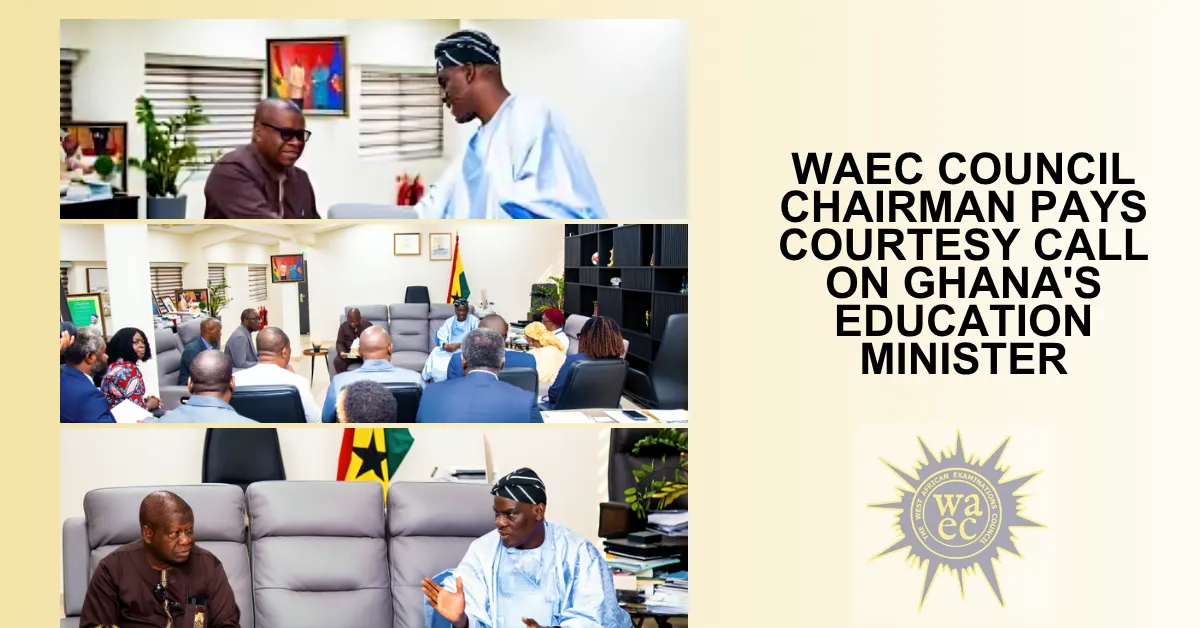
West Africa's most widely sat school examination is facing a reckoning over integrity, with senior officials from across the region's education ministries calling on the West African Examinations Council (WAEC) to deploy artificial intelligence as its primary weapon against the malpractice that continues to undermine the value of the West African Senior School Certificate Examination (WASSCE).
The calls came during WAEC's 74th Annual Council Meeting, which opened in Accra with member states including Nigeria, Ghana, The Gambia, Liberia and Sierra Leone in attendance. The meeting is scheduled to conclude on 28 March 2026.
Ghana's Deputy Minister of Education, Dr. Clement Abas Apaak, was among the most direct. "It is our hope that WAEC will be more deliberate in integrating technology in the conduct of WASSCE and leverage AI to curb examination malpractices," he said, describing the approach as the most effective available means of protecting the credibility of assessments that play a decisive role in the futures of millions of students across the subregion.
Ghana's Education Minister, Haruna Iddrisu, who received a courtesy call from WAEC Council Chairman Professor Thomas D. Ariyoma ahead of the meeting, struck a similar note, framing examination integrity as a duty owed directly to students. "We must appreciate that we owe the learners a standard of care and a standard of duty, and give them an environment in which they can give off their best," he said. Iddrisu also raised the prospect of AI deployment to strengthen assessment standards and expressed hope that the council meeting would produce concrete recommendations.
WAEC Registrar Alhaji Pateh Bah acknowledged that malpractice remains a persistent and damaging challenge, but said the council has been steadily expanding its technological response. "The council has continued to deploy more technology to sharpen existing monitoring mechanisms and strengthen its investigative systems across the sub region," he said.
The meeting also carried positive news: three outstanding Ghanaian female WASSCE candidates were honoured from a pool of 2,612,830 candidates, and the 35th Distinguished Friends of Council Award was conferred on Professor Afiakwa Asomaning for his contributions to science education and the energy sector. Ghana also confirmed its resumption of participation in the international version of WASSCE in 2026.
For Nigerian students sitting WAEC examinations, the regional push towards AI powered monitoring signals that the consequences of malpractice are likely to become harder to escape. More importantly, it is a signal that the examination on which University admission depends is being taken seriously enough to defend.

No comments yet. Be the first to share your thoughts!